
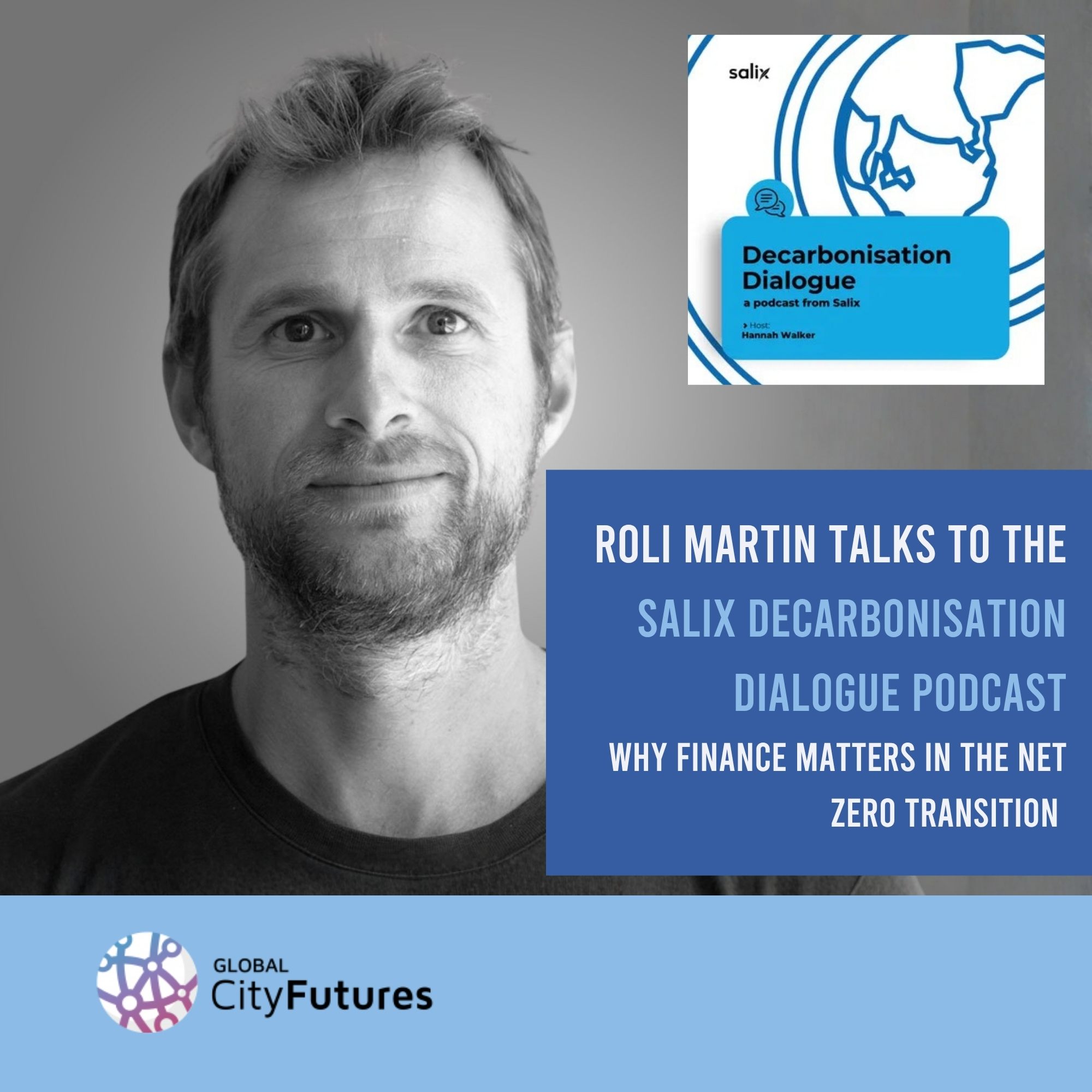
Why Finance Matters in the Net Zero Transition
In a recent episode of the Salix podcast Decarbonisation Dialogue, Roli Martin, Managing Director and Head of Finance at Global City Futures, joined host Hannah Walker to discuss one of the biggest challenges facing the transition to net zero: finance.
Listen here: Decarbonisation Dialogue with Roli Martin
Drawing on more than 20 years of experience in corporate finance and infrastructure advisory, Roli shared his perspective on how public sector organisations can fund decarbonisation projects and attract the investment needed to deliver long-term change.
The discussion explored the pressures facing local authorities, NHS trusts and education estates as they work towards ambitious carbon reduction targets. While organisations recognise the need to decarbonise, securing the funding, expertise and capacity to deliver projects at scale remains a significant challenge.
Reflecting on the themes discussed in the podcast, Roli said:
“There is no shortage of ambition across the public sector. The challenge is turning climate commitments into deliverable projects with a clear route to funding. That’s where we help organisations develop the commercial and financial foundations needed to move from strategy to action.”
A key theme of the conversation was what makes a decarbonisation project financially viable. While technologies such as solar PV, EV charging infrastructure and heat networks can generate returns, achieving net zero requires investment in a much broader range of interventions. The discussion highlighted the need to consider projects as part of a wider programme rather than in isolation.
At Global City Futures, this means helping clients build robust business cases and funding strategies that combine public and private investment.
“The most successful programmes bring together projects with different financial characteristics. By creating investable portfolios and blending funding sources, organisations can unlock capital and deliver greater carbon reduction outcomes than individual projects could achieve on their own.”
The podcast also explored the crucial role of public funding in attracting wider investment. Government-backed programmes can help reduce risk, giving private investors the confidence to participate in long-term infrastructure projects that support climate goals.
However, the benefits extend well beyond carbon savings. Decarbonisation projects can contribute to healthier buildings, cleaner air, lower operating costs and stronger local economies.
“When we assess projects, we’re looking at the full picture. Decarbonisation can create jobs, improve public services,enhance energy resilience and improve quality of life. Capturing those wider benefits is often key to building a compelling investment case.”
The episode concluded with a discussion about what investors look for when considering net zero infrastructure opportunities. Long-term certainty, stable returns and clearly defined outcomes remain important factors in attracting institutional capital.
“Investors want confidence that projects are well structured, financially sustainable and capable of delivering lasting value. Our role is to help clients create that confidence, bringing together funding, commercial expertise and strategic delivery support.”
The episode offers valuable insight into the financial frameworks needed to accelerate decarbonisation and the partnerships required to deliver climate action at scale. For organisations navigating the complexities of funding net zero projects, it provides a practical perspective on how public and private investment can work together to support the transition to a low-carbon future.
Listen to the full episode of the Salix Decarbonisation Dialogue podcast featuring Roli Martin for more insights into financing the transition to net zero.